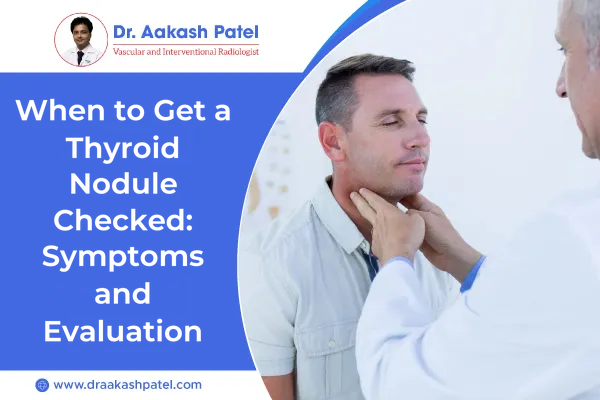
Dr. Aakash Patel is a Vascular and Interventional Radiologist in Ahmedabad who evaluates and treats thyroid nodules using image-guided procedures. A thyroid nodule is a growth within the thyroid gland, which may be solid, or fluid filled. While most thyroid nodules are harmless, some may require further evaluation to rule out potential concerns, including thyroid cancer. With the help of ultrasound technology, Dr. Aakash Patel carefully assesses each patient’s condition and recommends the appropriate course of action.
What Are Thyroid Nodules?
A thyroid nodule is a small lump or mass that forms in the thyroid gland, located at the base of the neck. These nodules may be benign (non-cancerous) or, in rare cases, malignant (cancerous). The presence of thyroid nodules is common, especially among older adults, and they often do not cause noticeable symptoms.
Symptoms That Mean a Thyroid Nodule Should Be Checked
While many thyroid nodules are harmless, certain symptoms indicate the need for further medical evaluation. These include:
- Rapid Growth of the Nodule: If a thyroid nodule increases in size quickly, it could be a sign of an underlying issue that should be checked promptly by a doctor.
- Difficulty Swallowing or Breathing: A large thyroid nodule may put pressure on the windpipe or esophagus, making swallowing or breathing difficult.
- Hoarseness or Voice Changes: Persistent hoarseness or voice changes could be a sign that the thyroid nodule is affecting the vocal cords.
- Pain in the Neck or Throat: Discomfort or pain in the throat or neck could indicate an inflamed or problematic thyroid nodule.
- Unexplained Weight Loss or Fatigue: If a thyroid nodule is overactive, it may cause symptoms of hyperthyroidism, such as weight loss, fatigue, and increased heart rate.
- Family History of Thyroid Cancer: Individuals with a family history of thyroid cancer should have thyroid nodules evaluated promptly to rule out malignancy.
Common Causes of Thyroid Nodules
Several factors contribute to the development of thyroid nodules, including:
- Iodine Deficiency: A lack of iodine in the diet can lead to thyroid nodule formation and enlargement.
- Thyroid Cysts: Fluid-filled cysts can develop within the thyroid, sometimes requiring drainage or monitoring.
- Autoimmune Thyroid Disorders: Conditions like Hashimoto’s thyroiditis or Graves’ disease may lead to thyroid nodules and gland dysfunction.
- Benign Thyroid Tumors: Most thyroid nodules are non-cancerous adenomas, but some may require further assessment.
- Thyroid Cancer: Although rare, some thyroid nodules are cancerous and require medical intervention.
How Dr. Aakash Patel Diagnoses Thyroid Nodules
- Ultrasound Evaluation: Dr. Aakash Patel uses ultrasound imaging to assess the size, shape, and characteristics of thyroid nodules, helping determine if further tests are necessary.
- Fine Needle Aspiration Biopsy (FNAB): If a thyroid nodule appears suspicious, a fine needle aspiration biopsy (FNAB) is performed to collect cells for laboratory analysis.
- Thyroid Function Tests: Blood tests measuring TSH, T3, and T4 levels help evaluate whether the thyroid nodule is affecting hormone production.
- Molecular Testing: For uncertain biopsy results, molecular testing helps determine whether a thyroid nodule is benign or cancerous.
Treatment Options for Thyroid Nodules
- Monitoring and Observation: Benign thyroid nodules that do not cause symptoms may be monitored over time using ultrasound.
- Thyroid Hormone Therapy: For some patients, thyroid hormone therapy may help shrink nodules and regulate hormone production.
- Minimally Invasive Procedures: Dr. Aakash Patel offers radiofrequency ablation (RFA) and ethanol ablation therapy (EAT) for non-surgical treatment of certain thyroid nodules.
- Surgery (Thyroidectomy): In cases of cancerous or large symptomatic thyroid nodules, surgical removal of part or all of the thyroid glands may be necessary.
About Dr. Aakash Patel
Dr. Aakash Patel is a vascular and interventional radiologist who evaluates and manages thyroid nodules using ultrasound guidance. He holds MBBS, DNB (Radiodiagnosis) and FVIR qualifications and offers non-invasive and minimally invasive treatments, with the options, benefits and risks explained to each patient. Whether you need a routine evaluation or treatment for a thyroid nodule, Dr. Aakash Patel offers care tailored to your specific condition at KD Hospital, Ahmedabad.
Conclusion
A thyroid nodule may be harmless, but knowing the symptoms helps with early diagnosis and treatment. If you experience symptoms such as difficulty swallowing, rapid nodule growth, or voice changes, a consultation with Dr. Aakash Patel can help clarify the cause and the next steps. Using ultrasound imaging and personalized treatment strategies, Dr. Aakash Patel plans care around each patient's thyroid condition.
If you have concerns about a thyroid nodule, you can call us at +91 9586961070 or Book Your Appointment with Dr. Aakash Patel for an evaluation.