Table of Contents
- Introduction
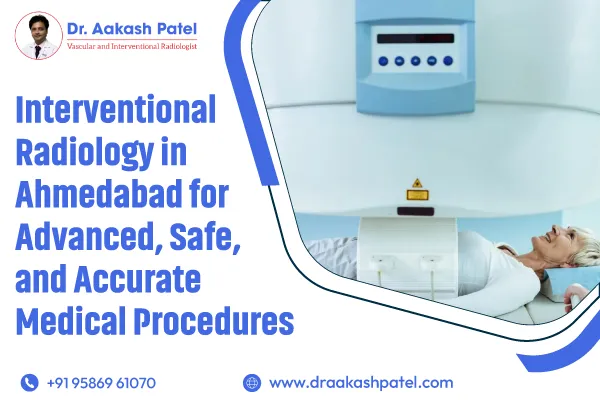
Advances in medical science have drastically transformed how many serious conditions are diagnosed and treated. Among the most significant developments is interventional radiology — a minimally invasive, image-guided approach that offers precision, safety, and faster recovery. For patients in Ahmedabad seeking cutting-edge care, Interventional Radiology in Ahmedabad represents a modern standard for vascular, oncologic, and non-surgical interventions. Under the care of Dr. Aakash Patel, patients receive expert-level image-guided therapies designed to minimize pain and recovery time. This blog explores how the best interventional radiology in Ahmedabad delivers effective treatment for a wide range of conditions, why choosing an experienced provider matters, and how modern techniques improve patient outcomes.
What Is Interventional Radiology?
Definition and Core Principles
Interventional radiology (IR) is a medical specialty that uses advanced imaging techniques — such as X-ray fluoroscopy, computed tomography (CT), MRI, and ultrasound — to guide minimally invasive procedures inside the body. Rather than relying on large surgical incisions, IR uses tiny needles or catheters inserted through small punctures or natural orifices to reach the target area. This approach allows for both diagnostic and therapeutic procedures.
How IR Differs from Traditional Surgery
Traditional open surgery often involves large incisions, longer hospitalization, and extended recovery. In contrast, IR procedures employ image-guided techniques to target specific areas with great accuracy, reducing trauma to surrounding tissues. Many IR treatments are done under local anaesthesia or sedation, leading to fewer complications, lower infection risk, and shorter hospital stays. Because of these advantages, IR is often a preferred alternative when both diagnosis and treatment can be done without traditional surgery. This makes Interventional Radiology in Ahmedabad a vital option for patients seeking high-quality, minimally invasive care.
Common Interventional Radiology Procedures
Vascular Interventions
- Angiography & Angioplasty / Stenting — Used to detect and treat narrowing or blockages in arteries or veins. A small catheter is guided via imaging to the affected vessel, where a balloon may be inflated (angioplasty) and/or a stent placed to restore blood flow.
- Embolization — Used to block blood flow selectively, for instance in tumours, bleeding sites, or vascular malformations. This reduces bleeding risk or starves tumours of blood supply.
Biopsy and Drainage Procedures
- Image-Guided Biopsy — Using IR guidance, radiologists obtain tissue samples from deep-seated lesions with minimal risk. This is crucial for accurate diagnosis without the need for invasive surgery.
- Percutaneous Drainage — Fluid collections, abscesses, or cysts in organs can be drained safely using catheters placed under imaging guidance, which can be lifesaving in many cases.
Tumor Treatments and Ablation
- Tumor Ablation (Radiofrequency, Microwave, Cryo etc.) — For certain tumors (liver, kidney, lung etc.), IR enables localized destruction of diseased tissue without open surgery.
- Transarterial Chemoembolization (TACE) — In oncology cases, IR can deliver chemotherapy directly to the tumor via blood vessels, often followed by embolization to cut off tumor blood supply. This method is especially valuable in treating liver cancers and other unresectable tumors.
Additional Applications
Interventional radiology is not limited to vascular or oncologic cases. It is used in pain management, lymphatic system treatments, urinary tract interventions, biliary tract procedures, and more — reflecting a broad scope.
Why Interventional Radiology Is Important — Benefits of Choosing IR
- Minimally Invasive and Patient-Friendly: Because IR uses tiny punctures instead of large incisions, patients experience less pain, minimal scarring, and reduced risk of infection. Many procedures are done under local anesthesia or moderate sedation, making them safer, especially for patients who may not tolerate general anesthesia well.
- Faster Recovery and Shorter Hospital Stay: IR procedures significantly reduce hospital stay. Many treatments allow patients to return home the same day or within 24–48 hours instead of days or weeks required after open surgery. Faster recovery lets patients resume daily life sooner with minimal disruption.
- Precision and Accuracy through Imaging Guidance: Use of real-time imaging — CT, MRI, ultrasound, fluoroscopy — enables radiologists to navigate inside the body with high precision. This leads to accurate targeting of disease sites while sparing healthy tissue. This precision is especially beneficial in complex or hard-to-reach areas.
- Versatility Across Multiple Conditions: Interventional radiology covers a wide spectrum — vascular diseases, oncology, fluid drainage, biopsies, pain management, fertility, organ preservation, and more. Its adaptability makes it a valuable option across specialties.
- Cost-Effectiveness Compared to Traditional Surgery: With shorter hospital stays, reduced post-operative complications, and less need for intensive care, IR often leads to lower overall treatment costs. For many patients, especially in a resource-conscious context like India, this is a significant advantage.
- Lower Risk and Improved Safety Profile: Because the procedures are minimally invasive, risks such as heavy bleeding, wound infection, and prolonged recovery are reduced. Image guidance also reduces chances of error.
Interventional Radiology in Ahmedabad — Understanding Its Role and Benefits for Local Patients
Availability of Advanced IR Care Locally
Cities like Ahmedabad have witnessed growth in modern medical facilities equipped to deliver interventional radiology procedures. Patients looking for Interventional Radiology in Ahmedabad benefit from access to image-guided therapies without needing to travel long distances. Specialists such as Dr. Aakash Patel have introduced advanced IR services locally, making it possible for residents to receive state-of-the-art diagnosis and treatment — including angioplasty, embolization, biopsy, tumor ablation, and drainage — with international-standard imaging support.
Reduced Cost and Logistics for Patients
Local availability reduces the need for patients to travel to metropolitan centers far away, saving on travel costs, lodging, and associated inconvenience. Early access to IR treatments can also decrease waiting times, allowing for prompt medical care.
Comprehensive Treatment for Diverse Conditions
Whether a patient has vascular issues, fluid accumulations, tumors requiring ablation, or needs diagnostic biopsy, interventional radiology in Ahmedabad provides a comprehensive set of services. This versatility helps in holistic patient care under one roof under guidance of experienced professionals like Dr. Aakash Patel.
High Standards and Safety Compliance
Modern IR centres in Ahmedabad adhere to international protocols for imaging, radiation safety, sterile technique, and patient monitoring. With advances in imaging modalities and trained radiologists, patients get reliable care comparable to global standards.
When Is Interventional Radiology Recommended — Key Indications and Decision Factors
- Vascular Disorders and Vessel Blockages: Conditions such as peripheral arterial disease, blocked arteries, aneurysms, or vascular malformations often benefit from angioplasty, stenting, or embolization under IR guidance. These treatments may prevent serious complications such as limb ischemia or organ damage.
- Tumor Management and Cancer Care: For patients with tumors — liver, kidney, lung or bone — IR-based ablation or chemoembolization (like TACE for liver cancers) provides a less invasive treatment alternative, especially when surgical resection is not feasible.
- Deep-Seated Lesions, Abscesses or Fluid Collections: When fluid builds up in internal organs (abscesses, cysts), or a deep-seated lesion needs biopsy, IR can be used for image-guided drainage or sampling, reducing risks associated with open surgical procedures.
- Emergency or High-Risk Patients Unsuitable for Surgery: Some patients may not tolerate open surgery — due to comorbidities, age, or general health. IR offers a less invasive, lower-risk alternative via small punctures and minimal anesthesia.
- Multi-System or Multi-Organ Conditions: Because IR can target many organ systems (vascular, urinary, biliary, tumors, lymphatic), it becomes a versatile tool in complex cases requiring coordinated care, sometimes avoiding multiple surgeries.
Why Choose Dr. Aakash Patel for Interventional Radiology in Ahmedabad
Selecting a provider for Interventional Radiology in Ahmedabad can be critical to treatment success. Dr. Aakash Patel brings to patients a combination of deep expertise, advanced imaging infrastructure, and patient-centred care. As a dedicated interventional radiologist, he applies the latest minimally invasive techniques with precision and compassion. His approach emphasises accurate diagnosis, personalized treatment plans, and minimizing patient discomfort. Under his supervision, patients handled complex vascular, oncologic, and diagnostic cases with professionalism and medical integrity, making his practice among the best options for those seeking IR in Ahmedabad.
Conclusion
Interventional Radiology in Ahmedabad offers a transformative approach for diagnosing and treating complex medical conditions with minimal invasiveness, high precision, and shorter recovery times. Under experienced practitioners like Dr. Aakash Patel, patients gain access to advanced, image-guided therapies that cover vascular diseases, tumors, fluid drainage, biopsies, and more. IR combines the diagnostic power of medical imaging with therapeutic intervention — often replacing open surgeries, reducing risk, and improving patient comfort. For anyone seeking the best interventional radiology in Ahmedabad, IR presents a compelling choice that balances efficacy, safety, and convenience.
To consult Dr. Aakash Patel for advanced interventional radiology treatments in Ahmedabad, call +91 95869 61070 or Book Your Appointment Today.