Table of Contents
- Introduction
Key Takeaways
- Interventional radiology offers minimally invasive treatments for both vascular and non-vascular conditions.
- Dr. Aakash Patel is recognized as the Best Interventional Radiologist near me in Ahmedabad for specialized care.
- Patients can choose from various procedures like angioplasty and ablation tailored to their specific needs.
- Understanding the difference between vascular and non-vascular therapies is crucial for effective treatment planning.
- Interventional radiology combines imaging with minimally invasive treatments for various conditions.
Dr Aakash Patel is a leading provider of vascular and interventional radiology services. For patients searching for the Best Interventional Radiologist near me in Ahmedabad, it is important to understand how interventional radiology can be used for both vascular and non-vascular conditions. These procedures use imaging guidance to access and treat targeted areas through minimally invasive techniques.
What Is Interventional Radiology?
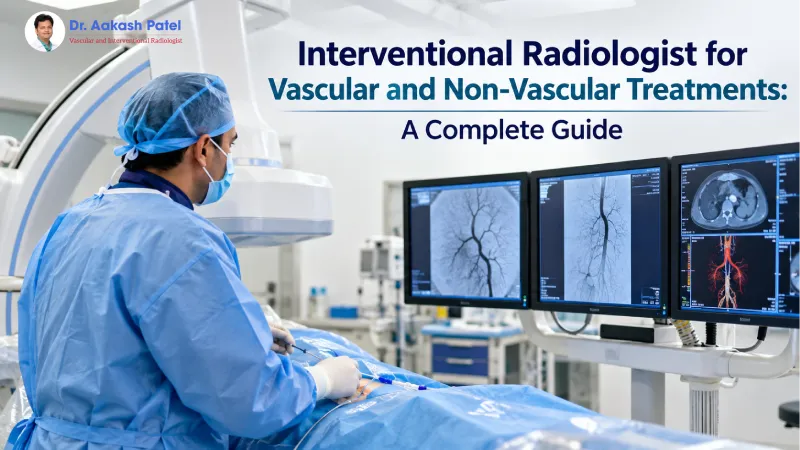
Interventional radiology is a medical specialty that combines medical imaging with minimally invasive treatment. An interventional radiologist uses imaging such as ultrasound, CT, MRI, and X-ray fluoroscopy to guide instruments such as needles, wires, and catheters to a specific part of the body.
The specialty covers a broad range of procedures. Some focus on blood vessels, while others target tumors, fluid collections, abnormal tissue, or other conditions outside the vascular system.
The key difference is that vascular and non-vascular interventions address different treatment targets, even though both rely on image guidance and minimally invasive techniques.
What Are Vascular Interventional Treatments?
Vascular interventions focus on blood vessels, including arteries and veins. These procedures may be used to diagnose, open, block, or otherwise treat abnormal blood flow depending on the underlying condition.
At Dr Aakash Patel, the listed vascular expertise includes treatment approaches for varicose veins, deep vein thrombosis, peripheral vascular disease, dialysis fistulas, and selected embolization procedures. The practice also lists procedures such as peripheral balloon and stent angioplasty, catheter-directed thrombolysis, venography, fistula angioplasty, and embolization.
Common vascular interventions can include:
- Angioplasty and vascular stenting
- Catheter-directed thrombolysis
- Venography
- Fistula angioplasty
- Embolization
- Endovascular laser or radiofrequency ablation for selected varicose veins
For example, angioplasty uses a balloon catheter to open a narrowed or blocked blood vessel, with imaging used to guide the catheter to the treatment site.
What Are Non-Vascular Interventional Treatments?
Non-vascular interventions treat conditions outside the blood vessels while still using imaging to guide the procedure. These may involve tissue sampling, drainage, ablation, or other targeted techniques.
The practice website lists non-vascular expertise including ultrasound-guided biopsies and drainages, radiofrequency and microwave ablation of selected tumors and osteoid osteomas, thyroid nodule ablation, and hepatobiliary interventions.
Some examples include:
- Image-guided biopsies
- Drainage procedures
- Radiofrequency ablation
- Microwave ablation
- Thyroid nodule ablation
- Selected liver and lung tumor interventions
- Hepatobiliary drainage and stenting
Image-guided biopsy and drainage are established interventional radiology techniques, while thermal ablation uses controlled energy to treat selected abnormal tissue.
Vascular vs Non-Vascular Interventional Radiology
Although both categories use imaging guidance, their treatment goals and applications are different.
| Criteria | Vascular Interventions | Non-Vascular Interventions |
|---|---|---|
| Main target | Arteries and veins | Tumors, tissue, fluid collections and other structures |
| Common techniques | Angioplasty, thrombolysis, embolization | Biopsy, drainage, ablation |
| Imaging guidance | X-ray, fluoroscopy, ultrasound, CT | Ultrasound, CT, MRI or fluoroscopy depending on procedure |
| Examples | DVT, PVD, varicose veins, dialysis fistula | Tumors, thyroid nodules, fluid collections |
| Main objective | Modify or restore blood flow or treat vascular abnormalities | Diagnose, drain, destroy, or treat targeted non-vascular conditions |
The right procedure depends on the condition, its location, and the specific anatomy identified during clinical and imaging evaluation.
Conditions Treated Through Vascular Interventions
When vascular disease is involved, an interventional radiologist may offer a targeted treatment based on the patient's condition and vessel anatomy.
At Dr Aakash Patel, listed vascular treatment areas include:
- Varicose veins: The practice lists endovascular laser ablation and glue treatment for selected cases.
- Deep vein thrombosis: Catheter-directed thrombolysis and venography are among the listed procedures.
- Peripheral arterial disease: Peripheral balloon and stent angioplasty are listed as treatment options.
- Dialysis fistula problems: Fistula angioplasty is among the listed interventions.
- Varicocele and vascular malformations: Coil or glue embolization and other embolization procedures are listed.
These procedures allow the specialist to work directly within or around the affected vascular structure using imaging guidance.
Conditions Treated Through Non-Vascular Interventions
Non-vascular interventional radiology can be useful when the treatment target is a tumor, nodule, fluid collection, or another structure rather than a blood vessel.
The services listed by Dr Aakash Patel include interventions for liver tumors, thyroid nodules, uterine fibroids or adenomyosis, breast masses, and selected musculoskeletal conditions. Listed techniques include radiofrequency ablation, microwave ablation, uterine fibroid embolization, genicular artery embolization, biopsies, and drainage procedures.
The important point is that the technique is selected according to the medical problem rather than simply according to whether a procedure is minimally invasive.
How Does an Interventional Radiologist Decide the Treatment?
Most patients usually want to know where an Interventional Radiologist near me can be found because they wish to have a more conservative mode of treatment. The procedure, though, starts with an accurate assessment, not the process itself.
The standard process for treatment planning would include:
- Evaluation of the symptoms, past treatment, and documents.
- Medical imaging assessment to identify the area affected and the extent of the problem.
- Identification whether an intervention is needed at all.
- Specification of the process according to the anatomy and desired outcome.
- Provision of information about preparations, considerations, and follow-up procedures.
Interventional radiology is heavily image driven and therefore the imaging plays a very important part in the process.
What Should Patients Ask Before Treatment?
Before consulting an Interventional Radiologist near me in Ahmedabad, patients can prepare a few practical questions to make the discussion clearer:
- What condition is being treated?
- Is the procedure vascular or non-vascular?
- Which imaging tests are needed before treatment?
- Why is this particular technique being recommended?
- What are the important risks and limitations?
- What follow-up will be required?
Having previous scans, medical reports, medication details, and information about earlier treatments can also help the specialist evaluate the case more effectively.
Why Choose Us
At Dr Aakash Patel, our approach focuses on image-guided, minimally invasive treatment for a range of vascular and non-vascular conditions. Our website lists expertise across vascular disease, tumors, women's health, musculoskeletal problems, biopsies, drainages, ablation, embolization, and other interventional procedures. We focus on assessing the individual condition before recommending an appropriate intervention.
Conclusion
Interventional radiology includes more than one procedure. The vascular procedures treat the issues related to the artery and vein, while the non-vascular procedures involve tumors, nodules, collections of fluid and others. The both kinds of procedures use imaging to guide precise treatment. If you are searching for the Best Interventional Radiology in Ahmedabad, then the main thing you need to do is find out if the problem is suitable to be treated with interventional procedures and what kind of procedures would suit your case.
Searching for the Best Interventional Radiologist near me in Ahmedabad for vascular or non-vascular treatment? Contact Dr Aakash Patel to discuss your condition and available interventional treatment options. Call us at +91 95869 61070 or Book Your Appointment and take the next step toward a personalised treatment consultation.
Frequently Asked Questions
Interventional Radiologist Interventional Radiology Vascular Treatment Non-Vascular Treatment Image-Guided Treatment Minimally Invasive Procedures Vascular Diseases Tumor Treatment Varicose Veins Ahmedabad