

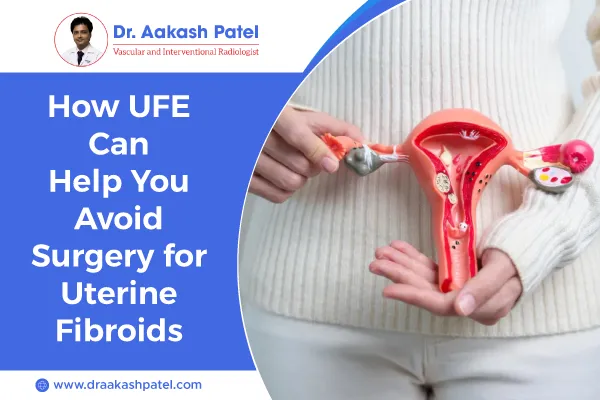
For millions of women worldwide, uterine fibroids are an uncomfortable and often debilitating reality. These noncancerous growths in the uterus can cause symptoms such as heavy menstrual bleeding, pelvic pain, bloating, frequent urination, and even infertility. Traditionally, many women facing severe fibroid symptoms were advised to undergo a hysterectomy. However, advances in medicine now offer an alternative for suitable women: Uterine Fibroid Embolization (UFE). Dr. Aakash Patel, a vascular and interventional radiologist in Ahmedabad, provides this minimally invasive treatment to women seeking relief from fibroid symptoms without major surgery. In this blog, we’ll explore how UFE for uterine fibroids works, its advantages and risks, and why it is used for fibroid treatment without surgery.
Understanding Uterine Fibroids
Uterine fibroids are benign tumors composed of muscle and fibrous tissue. They can range from the size of a pea to as large as a melon and often occur during childbearing years. While many women may have fibroids without symptoms, others experience intense discomfort, irregular periods, and reproductive complications. For years, the go-to treatments included hormonal therapy or hysterectomy, but these came with side effects and permanent changes. Thanks to minimally invasive fibroid treatment options like UFE, women can now manage their symptoms and retain their uterus.
What is Uterine Fibroid Embolization (UFE)?
A non-surgical technique called uterine fibroids embolization (UFE) involves cutting off the fibroids' blood supply, which causes them to shrink and eventually die. This is accomplished by inserting a catheter into the uterine artery and releasing tiny particles that cut off the fibroid's blood supply. The surrounding healthy tissue is usually not affected. The entire process typically takes under an hour, is performed under local anesthesia, and allows for same-day or next-day discharge. How UFE works for fibroids is a combination of interventional radiology and image guidance, providing targeted treatment; side effects are usually mild, though all procedures carry some risk.
Benefits of UFE Procedure
The UFE procedure has several possible benefits for suitable patients:
- No Surgical Incision: Done through a small puncture in the skin, so there is no surgical incision and usually minimal trauma.
- Recovery: Many patients return to their regular activities within about 7–10 days.
- Preserve Uterus: UFE preserves the uterus and may help women avoid hysterectomy; its effect on fertility should be discussed with the doctor.
- Symptom Relief: Studies report symptom improvement in most women, although results vary.
- Outpatient Procedure: Many patients go home the same or next day.
For women who want to avoid hysterectomy for fibroids, UFE is a minimally invasive option to discuss with a doctor.
How UFE Works for Fibroids
Let’s break down how UFE works for fibroids step-by-step:
- A local anesthetic is applied, and a catheter is inserted into the groin or wrist.
- Using live X-ray imaging (fluoroscopy), the catheter is guided to the uterine arteries.
- Microscopic particles are injected into the arteries supplying blood to the fibroids.
- Because blood flow to the fibroids is restricted, they progressively decrease over the course of many weeks.
Unlike surgery, UFE does not involve cutting or removing tissue. It is a highly targeted minimally invasive fibroid treatment performed by a trained interventional radiologist such as Dr. Aakash Patel in Ahmedabad.
Is UFE Right for You?
UFE may be suitable for women who:
- Want to preserve their uterus
- Experience severe fibroid symptoms
- Are not ideal candidates for surgery
- Seek a faster recovery time
As an interventional radiologist who performs UFE in Ahmedabad, Dr. Aakash Patel conducts a full evaluation, including imaging tests and consultation, to determine if UFE is the right fit.
What to Expect After UFE
Post-procedure, patients may experience mild cramping, fatigue, or nausea, typically lasting a few days. Pain is usually managed with medication, and many patients notice an improvement in symptoms within 4–6 weeks; results vary. Fibroids continue to shrink for several months.
Follow-up imaging is done to monitor the progress. Dr. Aakash Patel provides follow-up and aftercare support.
What Results to Expect
Results of UFE differ from woman to woman. Many women notice less heavy bleeding and pelvic pain, but fibroids may not shrink completely, symptoms can return and some women need further treatment; the effect on fertility should be discussed with the doctor before this non-surgical treatment for fibroids.
If you would like to know whether UFE is suitable for you, you can book a consultation with an interventional radiologist who performs UFE in Ahmedabad.
Consulting Dr. Aakash Patel
At Dr. Aakash Patel’s clinic in Ahmedabad, we understand how distressing uterine fibroids can be. We offer a minimally invasive alternative through Uterine Fibroid Embolization (UFE), with its benefits and risks explained before treatment. Our team is led by Dr. Aakash Patel (MBBS, DNB Radiodiagnosis, FVIR), an interventional radiologist at KD Hospital, S.G. Highway, Ahmedabad, who provides care from initial consultation to post-procedure follow-up. We value every patient and treat each case with professionalism, attention, and genuine respect. Consultations are available Monday to Saturday, 10 AM to 6 PM.
Conclusion
Be aware that there are other options besides surgery if you're dealing with uterine fibroids. With the advent of Uterine Fibroid Embolization (UFE), women now have an established option that doesn’t involve removing the uterus. This minimally invasive fibroid treatment may improve quality of life and reduce symptoms, though results vary. Dr. Aakash Patel, an interventional radiologist in Ahmedabad, can explain whether it is suitable for you.
FAQ’s
Want to know more about non-surgical treatment for uterine fibroids? Call us at +91 9586961070 or email us at aakashptl9@gmail.com to learn whether UFE is suitable for you.