

Table of Contents
- Introduction
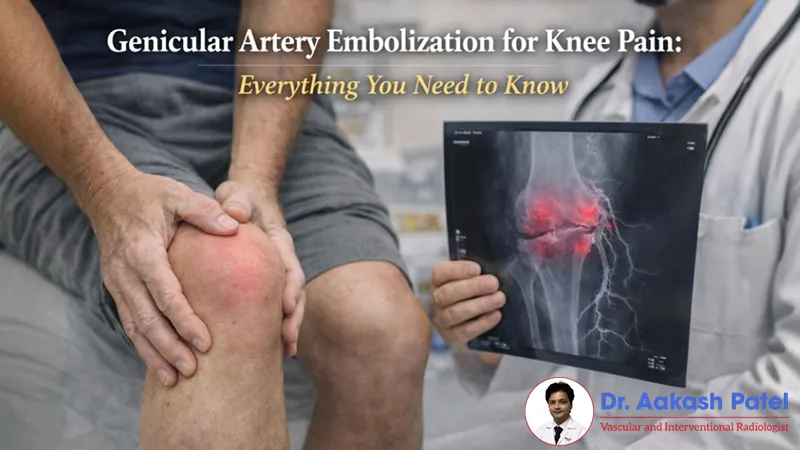
Knee pain has a quiet way of taking over daily life — and for many people, it happens before they fully realise what’s going on. One month you’re moving comfortably. The next, stairs feel like effort, long walks start getting shorter, and sleep is interrupted by that persistent joint ache. For working professionals and active adults, this isn’t just discomfort anymore — it begins to affect productivity, mobility, and overall quality of life.
What makes it more frustrating is the slow build-up. It often starts as mild stiffness after sitting too long. Then it lingers. Then it begins interfering with routine movement. If you’ve been diagnosed with knee arthritis — or notice early symptoms — the encouraging part is that treatment options have evolved. Patients today are not always required to move directly toward major surgery. Minimally invasive solutions are helping manage pain with less disruption to daily routines. One of these options is Genicular Artery Embolization, and in this guide, Dr. Aakash Patel explains the procedure in clear, practical language.
Why Knee Pain Becomes a Daily Struggle
Knee pain is now one of the most frequently reported joint concerns. Importantly, it does not affect only athletes or older adults. Office professionals, individuals with sedentary work patterns, and even physically active people can develop persistent knee discomfort over time.
The knee joint naturally experiences wear and tear. The cartilage — which normally allows smooth, friction-free movement — gradually begins to thin. As this cushioning layer breaks down, the joint stops moving as efficiently. Patients often describe the knee as stiff, heavy, or painful during routine activities.
The most common long-term cause is knee osteoarthritis, a degenerative condition that progresses slowly. Many patients spend years trying medications, physiotherapy, braces, and lifestyle adjustments. While these may provide temporary relief, symptoms often continue in moderate to advanced stages.
From a real-world perspective, once knee pain starts interfering with work schedules, daily mobility, and sleep quality, it becomes more than an age-related issue. It becomes something that deserves structured medical attention — including exploring knee arthritis treatment Ahmedabad options when appropriate.
Understanding Knee Osteoarthritis in a Simple Way
The knee joint depends on cartilage to help bones move smoothly against each other. In osteoarthritis of the knee, this protective layer gradually wears away. As the surface deteriorates, the joint becomes irritated, inflammation increases, and movement becomes uncomfortable.
Many patients experience pain while walking, stiffness after sitting, difficulty climbing stairs, swelling, and a noticeable reduction in range of motion. One of the more frustrating aspects is the unpredictability — some days feel manageable, while others significantly limit normal activity.
When this pattern continues for months, it often signals the need to look beyond short-term symptom management and consider structured options such as embolization treatment for knee pain in suitable cases.
Symptoms That May Suggest Knee Osteoarthritis
Patients who consult Dr. Aakash Patel often describe similar symptoms. These typically include deformity of the joint, difficulty walking, inability to comfortably hold weight, knee instability, long-term discomfort, sleep disturbance due to pain, and reduced range of motion. If several of these are present, it may be time to consider a more targeted treatment approach rather than repeatedly managing flare-ups.
What Is Genicular Artery Embolization treatment
Genicular Artery Embolization treatment is a minimally invasive knee pain treatment, image-guided procedure designed to help manage chronic knee pain, particularly when associated with osteoarthritis.
In arthritic knees, small blood vessels around the joint can become overactive, increasing blood flow to inflamed tissue. This excess circulation can sustain inflammation and contribute to ongoing pain. The procedure works by precisely targeting these vessels and reducing the excess blood supply. By addressing this inflammatory driver, the treatment aims to reduce pain and improve joint comfort.
The procedure is performed under X-ray imaging guidance and is typically completed as a same-day outpatient treatment. Dr. Aakash Patel also applies this technique for conditions such as plantar fasciitis, ankle pain, and frozen shoulder when clinically appropriate.
From a day-to-day standpoint, reduced inflammation can mean fewer pain interruptions, improved movement tolerance, and less dependence on repeated short-term medication.
How Genicular Artery Embolization for knee pain Helps (Without Major Surgery)
One of the main reasons patients explore Genicular Artery Embolization for knee pain is because it does not involve open joint surgery or knee replacement. There is no large incision, no bone replacement, and typically no overnight hospital stay. Instead, the procedure is performed through a small access point using catheter-based, imaging-guided technology.
For patients with knee osteoarthritis, this approach often becomes relevant when conservative treatments are no longer providing sufficient relief, pain has become persistent, or major surgery feels premature. Many patients are simply looking for a way to improve daily mobility without committing immediately to joint replacement.
From a practical perspective, the shorter recovery period can help reduce time away from work and minimise disruption to routine responsibilities for suitable candidates. It is important to remain realistic, however — Genicular Artery Embolization is not a cure for arthritis. It is a targeted technique designed to reduce inflammation-related pain in carefully selected patients.
Why People with osteoarthritis of the knee Consider This Treatment
Patients living with osteoarthritis of the knee often feel caught between ongoing medication-based care and major surgical intervention. genicular artery embolization treatment in ahmedabad offers a middle-ground option. It provides an outpatient, image-guided approach that may help control symptoms without immediately moving toward knee replacement. For many individuals, this creates breathing room — the possibility of improving function and comfort while keeping future treatment options open.
Hypothetical Example: Where This Treatment May Fit
Consider a hypothetical example (not a real patient case): an office worker in his late fifties with persistent knee pain that affects both his daily commute and sleep. He has already completed physiotherapy and medication courses with only partial relief and is not ready to consider knee replacement surgery.
After clinical evaluation, a patient like this may be assessed for Genicular Artery Embolization. Some patients notice less discomfort while walking in the following weeks, but individual responses vary; the example only shows where the procedure may fit within a structured treatment plan.
How the Procedure Is Done
Dr. Aakash Patel provides Genicular Artery Embolization treatment for Knee Pain / Planter Fasciitis / Frozen Shoulder as a minimally invasive knee pain treatment that typically takes less than one hour.
Patients are first positioned comfortably and given a local anaesthetic to numb the treatment area. Using X-ray imaging guidance, the targeted vessels are carefully identified. A very small incision is made, and a catheter is guided to the genicular arteries. Tiny embolic particles are then delivered to reduce abnormal blood flow to the inflamed region. After a short monitoring period, most patients are discharged the same day with follow-up instructions.
The focus throughout is on careful technique, patient comfort, and minimising downtime.
Recovery: What Most Patients Can Expect
Because genicular artery embolization treatment in ahmedabad is minimally invasive, recovery is generally smoother than traditional surgical procedures. Most patients return home the same day, rest briefly, and gradually resume routine activities over the following days. Some temporary discomfort after the procedure is possible and is usually manageable with medication. Follow-up remains important to track progress and guide further care.
The broader clinical goal is not just pain reduction but improved mobility, better sleep quality, and greater confidence in everyday movement.
Who Might Be a Good Candidate?
This treatment may be considered for patients who have chronic knee pain related to arthritis, experience symptoms that affect walking or sleep, have tried conservative treatments with limited success, or prefer a minimally invasive knee pain treatment. Final suitability always depends on detailed clinical evaluation, as knee pain patterns vary significantly between individuals.
Consulting Dr. Aakash Patel
At Dr. Aakash Patel practice, care begins with careful listening and detailed evaluation. Chronic knee pain affects far more than joint movement — it influences energy levels, work performance, and everyday confidence. Our approach combines personalised assessment with minimally invasive embolization treatment. Dr. Aakash Patel assesses each case of knee osteoarthritis before treatment and explains that all procedures carry some risk. Imaging guidance, careful case selection, and same-day discharge in many suitable cases aim to minimise disruption to your routine.
Equally important is the emphasis on patient education. Every step is explained clearly so you can make informed decisions without feeling rushed or pressured.
Conclusion
Knee pain caused by osteoarthritis of the knee can gradually limit mobility, disturb sleep, and reduce overall quality of life. The encouraging shift in care is that patients now have access to options that sit between conservative therapy and major surgery. Genicular Artery Embolization treatment offers a minimally invasive knee pain treatment, outpatient approach that specifically targets inflammation-related blood flow and may help reduce persistent knee pain while supporting improved joint function.
If you are exploring genicular artery embolization treatment in ahmedabad, consulting a specialist is an important step toward an appropriate care pathway. Dr. Aakash Patel focuses on image guidance, patient safety, and personalised treatment planning so you feel supported throughout the journey. With timely evaluation and appropriate treatment selection, many patients find daily movement becomes more comfortable and manageable again.
To book a consultation, call Dr. Aakash Patel on +91 95869 61070 or book your appointment to explore whether this minimally invasive solution is right for you.
Key Takeaways
- Genicular Artery Embolization - A Treatment that May Reduce Knee Pain. This is a minimally invasive outpatient treatment that aims to ease the pain caused by inflammation.
- If you suffer from knee osteoarthritis & have tried the usual conservative treatments to no avail, then this could be worth looking into.
- Getting osteoarthritis of the knee checked early helps you understand your options, as ongoing symptoms can affect day-to-day activities and a good night's sleep.
- The whole procedure usually takes less than an hour & many patients go home the same day.
- If you're looking for genicular artery embolization treatment in ahmedabad, Dr. Aakash Patel offers this procedure at KD Hospital, S.G. Highway.
Frequently Asked Questions
Genicular Artery Embolization Knee Pain Knee Osteoarthritis Osteoarthritis of the Knee Knee Arthritis Embolization Treatment Minimally Invasive Procedure Outpatient Treatment Dr. Aakash Patel Ahmedabad