

Table of Contents
- Introduction
Key Takeaways
- Genicular artery embolization is a minimally invasive, image-guided procedure that targets abnormal vessels contributing to chronic joint pain.
- It is particularly relevant in patients with knee osteoarthritis and selected cases of ankle pain and frozen shoulder where inflammation plays a major role.
- Genicular artery embolization treatment is usually done as a day-care procedure, with most patients going home the same day and resuming activities gradually.
- The procedure does not replace healthy cartilage but can significantly reduce pain and improve function when combined with physiotherapy and lifestyle changes.
- Consulting a specialist like Dr. Aakash Patel helps you understand whether genicular artery embolization is appropriate for your specific condition and long-term goals.
For adults struggling with chronic joint pain who want meaningful relief without major surgery, genicular artery embolization offers a scientifically grounded, image-guided treatment that targets pain at its source while preserving joint structure. This article is written for general readers, working professionals, and active seniors who want clear, honest information before taking any medical decision.
Understanding Knee Pain, Ankle Pain, and Frozen Shoulder
Knee pain, ankle pain, and frozen shoulder are among the most common musculoskeletal problems seen in clinical practice, especially in people with osteoarthritis, sports injuries, repetitive strain, or metabolic conditions like diabetes. They affect everyday movements such as walking, climbing stairs, getting up from a chair, or even lifting the arm to comb hair or reach overhead. When symptoms persist for months, they start affecting sleep, independence, and overall quality of life.
Knee pain is very often associated with knee osteoarthritis, a degenerative joint condition where the cartilage gradually wears out, leading to joint space narrowing, stiffness, and inflammation in and around the joint. In ankle pain, repetitive overuse, ligament injuries, or chronic inflammatory changes can lead to persistent discomfort around the foot and ankle, sometimes overlapping with plantar region complaints. Frozen shoulder is characterized by pain and progressive stiffness of the shoulder joint, making even simple tasks like dressing or reaching back extremely difficult.
Typical Symptoms Patients Report
Patients with knee pain, plantar region pain, or frozen shoulder frequently describe:
- Deformity or visible change in the shape of the joint
- Difficulty walking or climbing stairs, especially on uneven surfaces
- Inability or reduced ability to hold weight on the affected limb
- A sense of knee instability, “giving way,” or lack of confidence in the joint
- Long-term pain or discomfort that persists beyond normal healing time
- Pain that interferes with daily activities such as household work, office tasks, or exercise
- Pain that disturbs sleep or makes it hard to find a comfortable position at night
- Reduced range of motion, such as limited bending, straightening, or lifting of the joint
When conservative measures like physiotherapy, oral pain medications, and lifestyle changes fail to provide adequate relief, many patients feel they are left only with the option of major surgery. This is exactly the gap where genicular artery embolization treatment can play an important role, particularly in carefully selected patients.
What Is Genicular Artery Embolization Treatment?
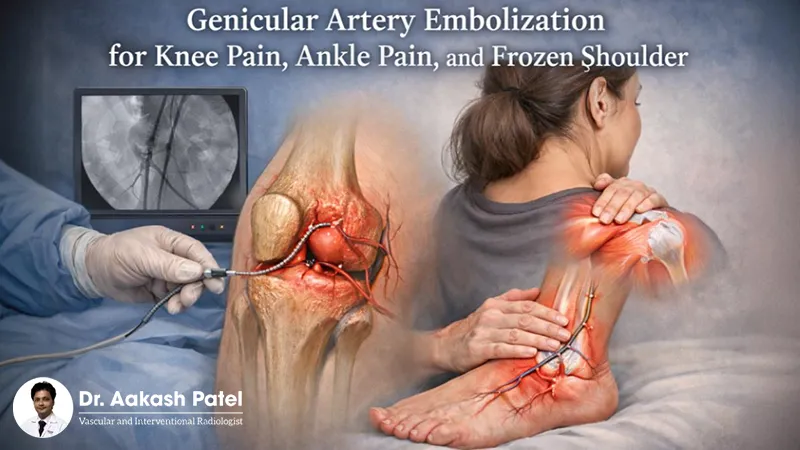
Genicular artery embolization treatment - a minimally invasive procedure that's performed by an expert interventional specialist to take the edge off chronic knee pain - especially when it's caused by conditions like knee osteoarthritis or similar inflammatory joint pain problems. The twist here is that instead of cutting open the joint, the procedure works by targeting the tiny blood vessels that supply the area that's causing the pain from the inside.
These are the genicular arteries - they're the small branches that stem off the bigger blood vessels that bring oxygen to the tissues around the knee. In chronic inflammatory conditions, weird tiny blood vessels start to pop up around the joint lining, and the blood flow gets all out of whack - which is a big contributor to the persistent pain and inflammation. During genicular artery embolization, these pain producing vessels are blocked using microscopic particles, which helps to reduce the inflammation and pain signals to the brain. And the good news is that it doesn't hurt the big picture - the limb itself is perfectly fine.
What's more, the same idea behind this procedure can be adapted to help people with ankle discomfort or frozen shoulder. By cutting off the blood supply to the inflamed tissues that are causing the pain, it's possible to reduce the pain levels and even get some of the function back without having to resort to major surgery or replace the joint. That makes it a pretty attractive option for people who've tried everything else but are still stuck in pain - a sort of middle ground between conservative therapy and the more radical surgery options.
How Genicular Artery Embolization Works - Step by Step
The procedure usually follows a pretty standard sequence designed to keep things as safe and precise as possible:
- Checking it all out: Before your doctor recommends genicular artery embolization they will review your medical history, do a physical check-up, and take a look at any imaging we've done - X-rays or an MRI for example - to make sure the symptoms match up with knee osteoarthritis or similar problems with the structure or inflammation in your knee.
- Planning the approach: Using any images we've already taken and some on-the-spot imaging, the specialist will find the genicular or related arteries that are feeding the painful area of your knee, ankle, or shoulder.
- Getting you numb and in - making a small incision: We'll usually give you a local anaesthetic to numb the area near your groin, or sometimes we might do it closer to the affected limb and make a tiny nick in the skin to get the catheter into the artery.
- Getting the catheter in place: Using real-time imaging we'll guide the catheter through the blood vessels to reach the arteries we want to block off for genicular artery embolization or find the right vessels for ankle and shoulder issues.
- Blocking off the problem vessels: Once we're in the right spot, we'll inject some tiny particles that will reduce blood flow to the inflamed areas. This should help lower the pain signals and reduce the inflammation in the long run.
- Finishing up and watching over you: After the treatment, we'll remove the catheter, apply some pressure to the access point for a little while, and then keep an eye on you for a few hours before you head home. The whole process usually takes under an hour, and you won't need to stay overnight, which is a big deal for people who have to keep working or have other things going on in their lives.
Conditions where Genicular Artery Embolization can Help
Although it was originally used mainly for knee osteoarthritis, we've also found it can help with some cases of ankle pain and frozen shoulder, especially when there's a clear link between the pain and the blood vessels in the area:
- Knee pain that just won't go away, even when you're taking medication, exercising, and making lifestyle changes, especially if you're trying to avoid getting a knee replacement.
- Chronic ankle pain that's usually caused by repetitive stress or degenerative changes, and where there's clear evidence of inflammation around the ankle.
- Frozen shoulder that's been causing a lot of pain and stiffness for a long time, especially during the phases where the inflammation is really a big part of the problem.
It's worth understanding that genicular artery embolization doesn't “cure” arthritis or make the structural damage disappear, but it can help reduce the pain and inflammation, making it easier for you to do the exercises, physiotherapy, and other things that will help keep your joint healthy in the long run.
How Genicular Artery Embolization Supports Long-Term Joint Health
Pain relief alone is valuable, but the real strength of genicular artery embolization is how it can open a window for better long-term joint care. By reducing pain linked to knee osteoarthritis and related conditions, patients can:
- Participate more actively in physiotherapy to strengthen muscles and improve joint alignment.
- Resume low-impact activities such as walking, cycling, or supervised exercises that support weight control and cardiovascular health.
- Sleep better, which influences overall healing, mood, and energy.
- Delay more invasive procedures in certain cases, while maintaining functionality and quality of life.
The aim is always to combine genicular artery embolization treatment with a holistic plan that may include weight management, postural advice, ergonomics, and targeted exercises. This integrated approach helps translate procedural benefits into sustainable improvements.
Why Choose Us
You'd be best off going with Dr Aakash Patel and his team because the whole way they approach care is centred around precision, transparency, & making sure you feel at ease, not just the actual treatment itself. From the initial consultation, you get the low-down in plain language, so you have a real chance of understanding what genicular artery embolization, genicular artery embolization treatment, and other options are likely to bring to the table when it comes to fixing knee osteoarthritis, ankle pain, or a frozen shoulder.
The practice is all about using latest imaging techniques, meticulous technique & tailored planning to pinpoint the pain-generating blood vessels without causing damage to surrounding tissues which is super important for your joint to stay in good nick in the long run. After treatment follow-up care involves guidance on physio, general movement & lifestyle changes so that the benefits of the treatment get reinforced by you generally moving & acting in a better way. By combining top-notch medical skills with a human approach that treats you with respect, Dr Aakash Patel’s clinic – which is essentially a Dr Aakash Patel brand in itself – becomes a solid partner on your road to moving with less pain & more confidence.
Conclusion
Genicular artery embolization has started to look like a genuinely promising, minimally invasive option for folk with chronic knee pain, ankle pain, & frozen shoulder who aren’t ready or suitable for major surgery but want something more than just quick fix pain relief. By pinpointing the small blood vessels that feed into inflamed tissues, genicular artery embolization treatment specifically targets an important source of pain in cases of knee osteoarthritis and other related conditions – & you get to go home the same day.
When you match it up with physio, healthy lifestyle changes & regular check-ins, this approach can actually get you moving better, support your mobility & give you the time & space to plan for your long-term joint health without feeling forced into some irreversible procedure. Choosing a specialist like Dr Aakash Patel & his team is basically a guarantee that your case will be taken seriously, treated with precision & followed up with some genuine consideration for your comfort & goals. When you've got a clear message, your brand speaks clearly – similarly when your treatment plan is clear & tailored to you, your path to better movement gets a whole lot more achievable & reassuring.
For more information on genicular artery embolization, genicular artery embolization treatment, and advanced options for knee osteoarthritis, or to discuss knee, ankle, and shoulder pain solutions with a specialist, call us on +91 95869 61070 or book your appointment today to take a confident step towards targeted relief and better joint function.
Frequently Asked Questions
genicular artery embolization knee osteoarthritis knee pain treatment ankle pain treatment frozen shoulder treatment minimally invasive procedure chronic joint pain relief image guided treatment joint inflammation treatment interventional pain therapy