Varicose veins are one of the most common vascular conditions, often affecting people who spend long hours standing, have a family history of venous disorders, or face hormonal changes that put pressure on the veins. These swollen, twisted veins usually appear on the legs, causing not only cosmetic concerns but also discomfort and pain. Left untreated, they may lead to swelling, heaviness, skin changes, ulcers, or even serious complications like blood clots.
At KD Hospital, patients are treated by Dr. Aakash Patel, a Vascular and Interventional Radiologist who uses minimally invasive, image-guided techniques. One of the treatments he offers is Endovascular Laser Ablation (EVLA), a non-surgical procedure designed to relieve the symptoms of varicose veins. Dr. Aakash Patel's practice is not limited to varicose veins. He also performs vascular and non-vascular interventions for conditions like liver tumors, fibroids, thyroid nodules, and more, using image-guided procedures for both vein care and other interventional treatments.
What is Varicose Vein Disease?
Varicose vein disease develops when the tiny valves inside leg veins become weak or damaged. Normally, these valves push blood back up to the heart. When they fail, blood pools in the veins, causing them to enlarge and twist. Over time, this increased venous pressure leads to visible bulging veins, discomfort, and other symptoms.
Common symptoms include:
- Leg pain, heaviness, or throbbing
- Swelling in the lower legs and ankles
- Burning or itching around affected veins
- Discolored or hardened skin
- Restless legs or fatigue
In some people, varicose veins lead to skin changes, leg ulcers or superficial vein clots, and they are associated with a higher risk of DVT. See a doctor if you have skin changes, an ulcer, bleeding from a vein, or sudden pain and swelling in the leg. Many patients now ask about non-surgical varicose vein treatment when exploring their options. This reflects the growing interest in minimally invasive care for vein conditions.
What is Endovascular Laser Ablation Treatment?
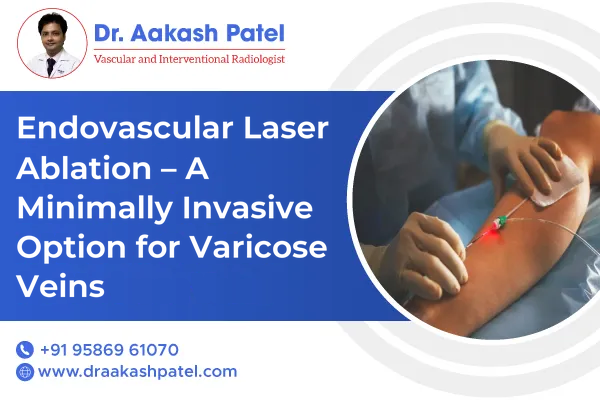
Endovascular Laser Ablation (EVLA) is a minimally invasive technique designed to treat varicose veins without the need for open surgery. During the procedure, a thin fiber is inserted into the affected vein under ultrasound guidance. Laser energy is then applied, heating the vein walls and causing them to collapse and seal shut. Over time, the body naturally absorbs the closed vein, and blood reroutes through healthier veins.
This approach provides:
- Usually done under local anaesthesia; most patients feel only mild discomfort
- Many patients return to routine activities within a few days
- Closure of the treated vein, which may give long-term symptom relief; results vary
- No large scars or surgical incisions
At KD Hospital, Dr. Aakash Patel performs EVLA procedures for varicose veins and explains the expected benefits and risks to each patient. The procedure is guided by ultrasound, and the doctor checks whether EVLA is suitable for each patient's veins before recommending it.
Benefits of EVLA Compared to Traditional Surgery
Traditional vein stripping surgery required larger incisions, longer recovery, and higher risks of complications. By contrast, EVLA offers patients a less invasive alternative:
- Minimally invasive: Done through a small needle puncture, so stitches are usually not needed
- Day-care procedure: Most patients go home the same day
- Recovery: Patients are usually encouraged to walk soon after the procedure, and many resume normal activities within a few days
- Published results: Studies report long-term symptom relief in most patients; results vary
- Cosmetic aspect: Usually no major scars, though some temporary bruising may occur
The move from open surgery to minimally invasive treatments like EVLA reflects wider developments in interventional radiology. EVLA is now one of the commonly used options for varicose veins, alongside other vein treatments and surgery.
About Dr. Aakash Patel – Minimally Invasive Treatments
Dr. Aakash Patel is a Vascular and Interventional Radiologist at KD Hospital, Ahmedabad. With his training (MBBS, DNB, FVIR), he focuses his practice on minimally invasive, non-surgical, image-guided treatment. His philosophy, "Health through pinhole access," reflects his commitment to minimally invasive care.
His areas of practice include:
- Varicose vein treatments like EVLA
- Ablation for liver tumors and lung cancers
- Embolization for uterine fibroids
- Minimally invasive therapies for thyroid nodules
- Interventions for knee pain and vascular conditions
Dr. Aakash Patel uses image-guided techniques to treat a range of conditions. For varicose veins, he explains each option, its benefits and its risks before treatment.
Risks and Safety of EVLA
Every medical procedure carries some risks, and EVLA is generally considered a safe procedure in suitable patients. Minor side effects may include temporary bruising, skin tightness, or mild discomfort, which usually settle over time. Serious complications are uncommon, and the doctor explains them before treatment. Common side effects are bruising, tightness and mild discomfort, which usually settle; less common risks include vein inflammation (phlebitis), nerve irritation causing numbness and, rarely, skin burns or deep vein thrombosis.
Patient Recovery and Lifestyle After EVLA
Many patients recover from EVLA within a few days, though this varies. Patients are encouraged to walk immediately after the procedure to promote healthy blood flow. Compression stockings may be advised for a short period to support healing.
To maintain long-term results, patients should:
- Stay active and avoid prolonged standing or sitting
- Maintain a healthy weight
- Elevate legs when resting
- Wear compression stockings if recommended
These lifestyle changes support long-term vein health after treatment. Regular follow-up visits also help track vascular health and check for new varicose veins over time.
Consulting Dr. Aakash Patel
KD Hospital, at Vaishnodevi Circle, S.G. Highway, Ahmedabad, provides interventional radiology treatments. Varicose vein treatment, including EVLA, is available at the hospital. Dr. Aakash Patel plans each treatment around the individual patient. He provides minimally invasive, image-guided treatment for a range of conditions and explains the options, benefits and risks. Consultations are available Monday to Saturday, 10 AM to 6 PM, at KD Hospital.
Conclusion
Varicose veins can cause discomfort, cosmetic concerns, and long-term complications if left untreated. With Endovascular Laser Ablation (EVLA), patients now have access to a minimally invasive treatment option. At KD Hospital, Dr. Aakash Patel provides EVLA treatment, which may give lasting symptom relief with a short recovery time for many patients; results vary from person to person. Patients with varicose veins can consult him at KD Hospital to discuss whether EVLA or another treatment is suitable. All procedures carry some risk, and the doctor explains these before treatment.
For more details on Endovascular Laser Ablation, call us at +91 9586961070 or Book an Appointment with Dr. Aakash Patel.