
When we think about life support for patients with end-stage renal disease, one medical tool stands out: the dialysis fistula. This surgically created artery-to-vein connection is the lifeblood of hemodialysis—literally. Without a working fistula, patients cannot reliably receive lifesaving dialysis treatments. That's where timely care and image-guided techniques come into play. Dr. Aakash Patel, a Vascular and Interventional Radiologist in Ahmedabad, offers minimally invasive Dialysis Fistula Disease Treatment that aims to restore and protect these crucial access points, so that patients can continue their dialysis.
What is a Dialysis Fistula?
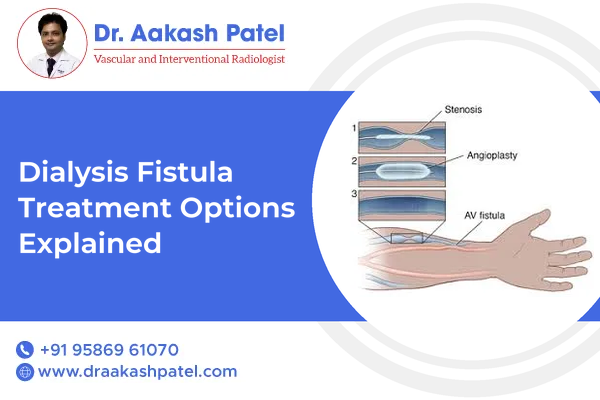
A dialysis fistula is crafted by joining an artery directly with a vein—usually in the arm. This connection allows blood to flow at high volume rates during dialysis and helps veins mature so they can be easily accessed. It's favored over central catheters because of its durability, lower infection risk, and greater long-term reliability. However, even the strongest fistulas can encounter problems like stenosis (narrowing), thrombosis (clotting), aneurysm, or infection. When that happens, Dialysis Fistula Disease Treatment becomes essential.
Common Fistula Problems & Early Symptoms
- Stenosis — Narrowing of the fistula, which may reduce blood flow.
- Thrombosis — Clot formation leading to complete blockage.
- Aneurysm or Pseudoaneurysm — Vessel wall weakening, which risks rupture.
- Infection — Local or systemic, requiring immediate care.
- High-flow complications — Excessive blood flow may stress the heart.
Early symptoms include poor thrill or pulse, prolonged bleeding post-dialysis, arm swelling, pain, or infection. Seek medical attention promptly if you notice these indicators or if dialysis sessions seem less effective.
About Dr. Aakash Patel
Dr. Aakash Patel provides Dialysis Fistula Disease Treatment in Ahmedabad. As a vascular and interventional radiologist (MBBS, DNB Radiodiagnosis, FVIR), he uses imaging guidance for diagnosis and treatment. Dr. Patel performs:
- Fistulograms — pinpointing problems inside the fistula
- Angioplasty — opening narrowed vessels
- Thrombectomy — clot retrieval to restore flow
- Stent placement — providing structural support
- Catheter placement — when alternatives are needed
Using image-guided procedures with ultrasound and fluoroscopy, Dr. Patel delivers minimally invasive treatments, usually under local anaesthesia, that aim to support recovery and long-term fistula health.
Treatment Pathways
- Angioplasty: A balloon catheter is inserted to stretch narrowed areas—which may relieve symptoms and help avoid surgery.
- Thrombectomy: Clots are removed using specialized tools, aiming to restore flow without open surgery.
- Stent Insertion: Used if angioplasty alone cannot keep the fistula open.
- Catheter-Directed Thrombolysis: A clot-busting drug is delivered directly via a catheter to dissolve deeper clots.
- Surgical Assistance: If the fistula has failed completely, Dr. Patel works with surgical teams for timely revisions.
These interventions, often completed as outpatient procedures, are part of Dialysis Fistula Disease Treatment and may help shorten hospital stays.
Recovery After Treatment
With minimally invasive methods, many patients return to normal activities within a few days. Many go home the same day and resume dialysis soon, often with less pain than after traditional surgery; recovery varies, and all procedures carry some risk. Regular follow-ups help monitor fistula health in the long term.
About Dr. Aakash Patel
Dr. Aakash Patel is a vascular and interventional radiologist who uses imaging guidance and minimally invasive techniques. In Dialysis Fistula Disease Treatment, every patient receives personalized attention, and the expected results, benefits and risks are discussed before treatment. At his clinic, patients are supported at every step—from fistulogram and treatment of narrowing or clots to follow-up monitoring, working with the vascular surgeon who created the fistula—with the aim of keeping dialysis access working. Dr. Patel aims for clear communication with patients and families.
Conclusion
Dialysis fistulas are lifelines for patients on hemodialysis. A well-functioning fistula ensures uninterrupted, efficient treatment—while problems risk serious health setbacks. In Dialysis Fistula Disease Treatment, Dr. Aakash Patel offers minimally invasive options that aim to salvage fistulas, reduce downtime, and improve quality of life. His approach uses image-guided treatment methods, with attention to comfort and safety; results vary from person to person. For anyone facing fistula problems, Dr. Patel can assess the fistula and explain the treatment options, benefits and risks, to support their dialysis care.
FAQs
Need advice about your dialysis fistula? Call Dr. Aakash Patel at +91 9586961070 or Book Your Appointment to discuss your fistula treatment options.