
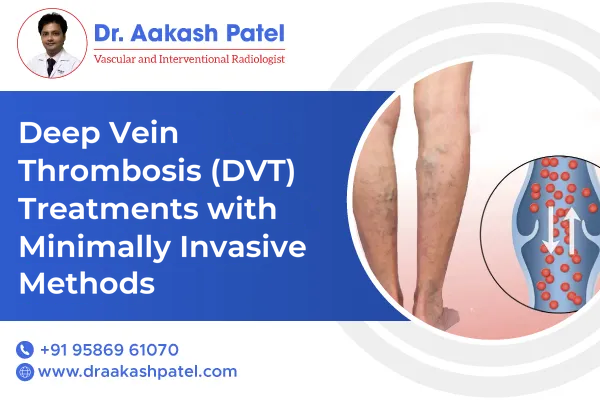
Deep vein thrombosis (DVT) is a critical vascular condition where blood clots develop in the deep veins, most commonly in the legs. While some patients may experience pain, swelling, or warmth in the affected area, others may not notice any symptoms until complications arise. If left untreated, DVT can result in severe risks such as pulmonary embolism.
Dr. Aakash Patel, a Vascular and Interventional Radiologist who treats deep vein thrombosis with minimally invasive methods, offers care that focuses on careful diagnosis and appropriate treatment. With his patient-centric approach, individuals suffering from DVT can receive timely interventions that aim to restore proper blood flow and reduce health risks.
What is Deep Vein Thrombosis (DVT) Disease?
Deep vein thrombosis is a serious condition that occurs when a blood clot forms in the deep veins of the body, most commonly in the legs. These blood clots can partially or completely block blood circulation, leading to pain, swelling, and discomfort in the affected area. While some patients experience clear symptoms, others may not show any signs, making the condition difficult to detect without proper medical evaluation. The risks of deep vein thrombosis increase due to prolonged immobility, major surgery, obesity, pregnancy, or a family history of clotting disorders. For this reason, timely deep vein thrombosis DVT treatment is crucial for patient safety and long-term health. At KD Hospital, patients receive diagnostic care and treatment from Dr. Aakash Patel. His practice focuses on minimally invasive, image-guided therapies for deep vein thrombosis treatment in Ahmedabad.
Causes of Deep Vein Thrombosis (DVT)
Understanding the causes of deep vein thrombosis helps patients identify risk factors and take preventive action. Some of the most common causes include:
- Prolonged immobility – Long flights, extended bed rest, or sitting for long periods restrict blood circulation
- Surgery or injury – Surgical procedures and trauma can damage blood vessels, increasing the risk of clot formation
- Genetic predisposition – A family history of clotting disorders makes individuals more vulnerable
- Medical conditions – Cancer, heart disease, and inflammatory disorders contribute to higher risks
- Hormonal factors – Birth control pills, pregnancy, or hormone replacement therapies can affect blood clotting
Identifying these causes is the first step toward receiving appropriate deep thrombosis treatment.
Symptoms of Deep Vein Thrombosis (DVT)
Patients should be aware of the symptoms of deep vein thrombosis. Some of the most noticeable symptoms include:
- Throbbing pain in the calf or thigh, especially while standing or walking
- Swelling in one leg, though rarely both legs may be affected
- Warm skin around the painful or swollen region
- Discolored, red, or darkened skin in the affected area
- Swollen and firm veins that may feel sore when touched
These symptoms need prompt medical assessment. Without treatment, the clot may grow or travel to the lungs, resulting in pulmonary embolism, which needs urgent care. Seeking deep thrombosis treatment near me at an early stage can help prevent serious health complications.
Treatment Options for Deep Vein Thrombosis
Medications
Blood thinners (anticoagulants) such as heparin or warfarin help stop clots from growing larger. In some cases, thrombolytic drugs are administered to dissolve existing clots.
Minimally Invasive Procedures
Dr. Aakash Patel performs catheter-based procedures for deep vein thrombosis treatment. These include:
- Catheter-Directed Thrombolysis: A catheter delivers clot-dissolving medication directly to the affected vein
- Mechanical Thrombectomy: Devices are used to break up and remove large clots
These techniques may allow faster recovery than traditional surgery and are options for deep thrombosis treatment near me in suitable patients.
Compression Therapy
Wearing compression stockings improves circulation and reduces swelling after deep vein thrombosis DVT treatment.
Lifestyle Modifications
Maintaining an active lifestyle, exercising regularly, and avoiding prolonged immobility play key roles in preventing recurrence.
Role of Dr. Aakash Patel in DVT Care
As a specialist in deep vein thrombosis treatment in Ahmedabad, Dr. Aakash Patel combines medical care with a patient-centered approach. He performs vascular interventions under image guidance and explains the benefits and risks of each procedure. At KD Hospital, his team provides support from diagnosis to deep thrombosis treatment, with care planned for each patient. He is a vascular and interventional radiologist (MBBS, DNB Radiodiagnosis, FVIR) for patients seeking deep vein thrombosis treatment in Ahmedabad.
Preventive Care for Deep Vein Thrombosis
Preventing DVT is as important as treating it. Patients at risk can reduce chances of clot formation by:
- Staying physically active and avoiding long hours of immobility
- Wearing compression stockings during travel or recovery
- Staying hydrated to improve blood circulation
- Seeking immediate medical advice when experiencing symptoms
With proactive preventive care, the need for urgent deep vein thrombosis treatment can often be avoided.
Consulting Dr. Aakash Patel at KD Hospital
At KD Hospital, patients receive care for deep vein thrombosis treatment under the guidance of Dr. Aakash Patel. He provides minimally invasive therapies such as catheter-directed thrombolysis and mechanical thrombectomy. Using image-guided techniques, KD Hospital provides minimally invasive options for deep vein thrombosis DVT treatment; all procedures carry some risk, which is explained before treatment.
Conclusion
Deep vein thrombosis is a potentially serious condition that requires prompt medical attention. By identifying symptoms early and seeking timely deep thrombosis treatment, patients can reduce the risk of serious complications such as pulmonary embolism or post-thrombotic syndrome. Dr. Aakash Patel offers minimally invasive procedures that aim to restore circulation and relieve symptoms; results vary from person to person. At KD Hospital, the focus is on patient safety and personalized care for deep vein thrombosis treatment in Ahmedabad. Timely intervention can help patients reduce the risks associated with DVT and return to their usual activities.
For more details on Deep Vein Thrombosis (DVT) Treatments, call us at +91 9586961070 or Book an Appointment.