
Table of Contents
- Introduction
Key Takeaways
- Coil or glue embolization treatment is a minimally invasive option for various vascular conditions.
- Patients seeking coil or Glue Embolization Treatment in Ahmedabad may recover more quickly than after traditional surgery, although this varies.
- The procedure utilizes imaging guidance for precise placement of embolization materials.
- Early consultation helps in accurate diagnosis and personalized treatment recommendations.
- All procedures carry some risk, and understanding potential complications is crucial for informed decision-making.
Dr Aakash Patel provides interventional radiology procedures that focus on treating vascular conditions through minimally invasive techniques. Among these modern procedures, coil or glue embolization has become an effective treatment option for selected patients because it offers targeted treatment without the need for major surgery. Understanding how this procedure works can help patients make informed decisions about their health.
Many vascular conditions once required open surgery, leading to longer hospital stays and extended recovery periods. Medical technology has transformed this approach with image-guided procedures that are safer for many patients and involve only a small puncture instead of large surgical incisions.
One such advancement is embolization therapy. Patients searching for coil or Glue Embolization Treatment in Ahmedabad often want a treatment that is effective, minimally invasive, and associated with quicker recovery. This procedure is designed to block abnormal blood flow by using specially selected medical materials under imaging guidance.
What Is Coil or Glue Embolization Treatment?
Coil or glue embolization is an interventional radiology procedure used to close abnormal blood vessels or reduce unwanted blood flow to a specific area. Depending on the condition being treated, the doctor may use tiny metallic coils, medical adhesive (glue), or a combination of both.
The procedure is performed using imaging guidance that allows controlled placement of the embolization material while minimizing disruption to surrounding tissues.
How Does the Procedure Work?
The procedure generally follows these steps:
- A small catheter is inserted through a tiny puncture in the skin.
- Imaging guidance helps the specialist navigate the catheter to the target blood vessel.
- Medical coils, glue, or both are carefully deployed to block the abnormal vessel.
- Blood flow is redirected through healthy vessels.
- The catheter is removed after completing the treatment.
Because the procedure does not require large incisions, many patients experience a smoother recovery compared to traditional surgery.
Conditions That May Be Treated with Embolization
Depending on clinical evaluation, embolization may be considered for selected vascular conditions, including:
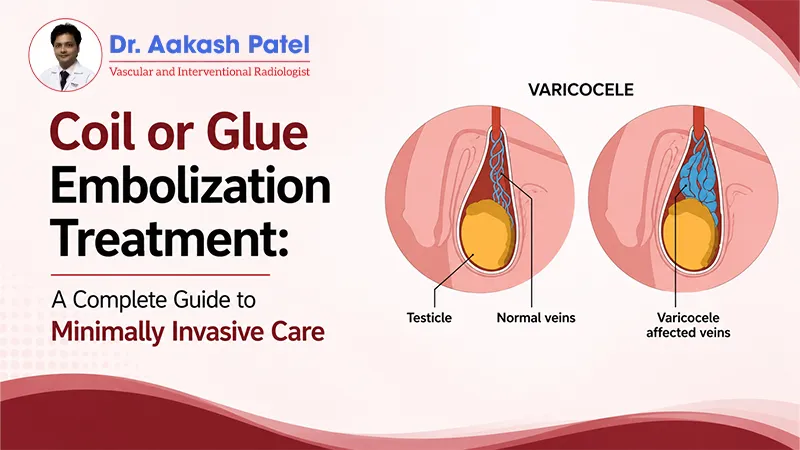
- Varicocele
- Certain abnormal blood vessels
- Some types of bleeding
- Selected vascular malformations
- Other conditions where embolization is clinically appropriate
The decision to perform embolization depends entirely on the patient's diagnosis and medical evaluation.
Benefits of Coil or Glue Embolization
Modern embolization techniques offer several potential advantages when recommended for suitable patients.
Some of the commonly recognized benefits include:
- Minimally invasive procedure
- Small skin puncture instead of major incision
- Reduced discomfort after treatment
- Shorter hospital stay in many cases
- For many patients, a quicker return to everyday activities
- Image-guided precision
- Personalized treatment planning
Patients considering coil or Glue Embolization Treatment in Ahmedabad often choose this procedure because of its minimally invasive nature and targeted approach.
Who May Be a Suitable Candidate?
Not every patient requires embolization. A detailed medical assessment helps determine whether the procedure is appropriate.
Your doctor may evaluate:
- Your symptoms
- Medical history
- Imaging findings
- Blood vessel anatomy
- Overall health condition
At Dr Aakash Patel, every treatment recommendation is based on careful evaluation rather than a standard approach.
What Happens Before the Procedure?
Before embolization, patients usually undergo a detailed consultation and imaging studies. Blood investigations and other diagnostic tests may also be recommended depending on the medical condition.Patients receive complete instructions regarding medications, fasting requirements, and preparation before the procedure.
Is the Procedure Painful?
Most embolization procedures are performed using local anesthesia with appropriate sedation when required. Patients generally experience minimal discomfort during the treatment.
The healthcare team closely monitors the patient throughout the procedure to provide a comfortable treatment experience.
Recovery After Coil or Glue Embolization Treatment
The recovery after embolization is often faster than after many conventional surgical procedures. As the procedure uses a catheter to perform the operation, pain is usually less, and the patient can slowly get back to their daily activities with the approval of the physician.
After the procedure, the patient will be monitored by the healthcare team for some time depending on the condition of the patient. Some pain in the area where the catheter was inserted can be felt by the patient at first.
During recovery, patients are commonly advised to:
- Take prescribed medications as directed.
- Stay well hydrated.
- Avoid heavy lifting for the recommended period.
- Attend scheduled follow-up appointments.
- Resume daily activities according to medical advice.
Following these recommendations supports a smooth recovery and helps doctors evaluate treatment outcomes during follow-up visits.
Are There Any Risks?
Like every medical procedure, embolization carries some potential risks. These vary depending on the patient's overall health, the condition being treated, and the location of the abnormal blood vessel.
Possible risks may include:
- Temporary pain or discomfort
- Minor bruising at the catheter site
- Infection (uncommon)
- Bleeding at the puncture site
- Rare complications related to blood vessels
Before recommending embolization, Dr Aakash Patel discusses the expected benefits, possible risks, and suitable treatment options so patients can make informed healthcare decisions.
Why Early Consultation Matters
Without evaluation, symptoms related to vascular conditions may progress over time. Seeking medical advice at an early stage helps identify the underlying cause and allows timely treatment planning.
Early evaluation offers several advantages:
- Accurate diagnosis
- Personalized treatment recommendations
- Better understanding of available treatment options
- Timely medical intervention when appropriate
- Regular monitoring and follow-up
Patients searching for coil or Glue Embolization Treatment in Ahmedabad often benefit from early consultation because treatment decisions are based on detailed clinical evaluation rather than symptoms alone.
About Dr Aakash Patel
At Dr Aakash Patel, we provide minimally invasive, image-guided interventional radiology treatments with a patient-focused approach. Each patient undergoes a detailed examination before we recommend a course of treatment. Using imaging guidance such as ultrasound and X-ray fluoroscopy, we aim to keep treatment as comfortable as possible for our patients. Our aim is to help each of our patients make well-informed choices when it comes to their health care needs.
Conclusion
Coil or glue embolization has changed the treatment of many vascular diseases as it provides a less invasive option than surgery for selected individuals who suffer from particular problems. The treatment involves the use of sophisticated imagery and the application of treatment in order to shorten the period of recovery. But before choosing embolization, one should undergo medical examination and have a proper diagnosis. Therefore, if you have been recommended to choose embolization or if you are having any symptoms associated with vascular diseases, seeking advice from a specialist is advisable. Dr Aakash Patel can evaluate your condition and explain the available treatment options.
Looking for coil or Glue Embolization Treatment in Ahmedabad? Consult Dr Aakash Patel for information on minimally invasive vascular care. Call +91 95869 61070 or book your appointment today.to discuss the right treatment option for your condition.
Frequently Asked Questions
Coil Embolization Glue Embolization Varicocele Treatment Interventional Radiology Minimally Invasive Procedure Coil or Glue Embolization Treatment in Ahmedabad Vascular Care Dr Aakash Patel Embolization Procedure Varicocele Care