

Table of Contents
- Introduction
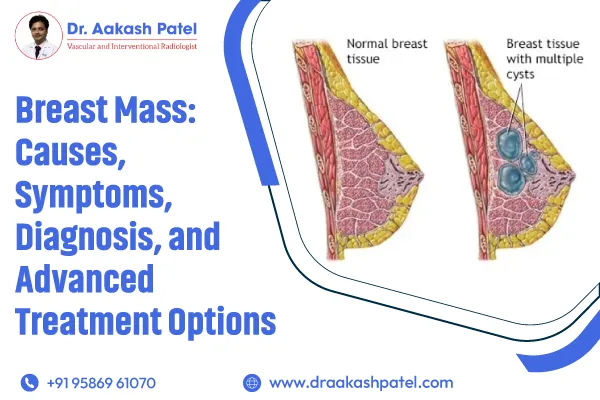
A breast lump is one of the most alarming health concerns for any woman or man, often triggering fear of cancer even before a proper medical evaluation. Medically, a breast mass refers to any abnormal growth or thickening in the breast tissue, which may be benign or malignant. While many breast lumps are non-cancerous and related to hormonal changes, cysts, or infections, some can represent serious underlying disease that requires immediate attention. Early diagnosis and timely medical care play a decisive role in successful outcomes, especially when advanced treatment options are available.
With growing awareness and access to modern imaging and minimally invasive procedures, breast lump treatment has become safer, more precise, and far less traumatic than in the past. Today, patients searching for breast lump treatment near me are seeking fast diagnosis, accurate results, and advanced options that preserve both health and quality of life. Under the care of Dr. Aakash Patel, patients benefit from expert evaluation, advanced diagnostic imaging, and state-of-the-art interventional treatments. This comprehensive guide explores the complete medical spectrum of breast masses, from causes and symptoms to diagnosis and the most advanced treatment options available today.
Understanding Breast Mass and Breast Lump
What Is a Breast Mass?
A breast mass refers to any distinct area within the breast that feels different from surrounding tissue. It may feel hard or soft, mobile or fixed, painful or painless. A mass does not automatically indicate cancer. In fact, the majority of clinically detected breast lumps are benign. Common benign causes include fibroadenomas, cysts, fat necrosis, and fibrocystic breast changes.
A breast lump may vary in size depending on hormonal fluctuations, especially during the menstrual cycle. Some lumps appear suddenly and disappear on their own, while others persist or grow slowly over time. Persistent or enlarging lumps always require medical evaluation.
Difference Between Benign and Malignant Breast Mass
Benign breast masses are typically smooth, well-defined, and mobile under the skin. Malignant masses often feel hard, irregular, and fixed to surrounding tissue. However, physical examination alone cannot reliably distinguish between benign and malignant growths. This is why imaging and tissue diagnosis are critical components of modern breast mass treatments.
Causes and Risk Factors of Breast Lumps
A breast lump can develop due to a wide range of physiological, hormonal, infectious, and neoplastic conditions. Understanding these causes helps guide accurate diagnosis and medical decision-making.
- Hormonal and Benign Causes: Hormonal fluctuations during puberty, pregnancy, menstruation, and menopause frequently cause benign breast lumps. Fibroadenoma, the most common benign breast tumor in young women, develops due to hormonal sensitivity of breast tissue. Cysts form when fluid accumulates within breast ducts and are frequently seen in women aged 35 to 50 years.
- Inflammatory and Traumatic Causes: Mastitis and breast abscesses cause painful lumps associated with redness and fever. Fat necrosis occurs after breast trauma or surgery and may mimic a tumor on physical examination.
- Neoplastic Causes: A breast mass may also represent a benign tumor such as papilloma or a malignant tumor such as breast cancer. Age, genetic mutations, family history, prolonged estrogen exposure, obesity, and lifestyle habits influence cancer risk. Any unexplained lump in women over 40 should be evaluated without delay.
Symptoms That Require Immediate Attention
Not all breast lumps present with pain. Many malignant tumors are painless in the early stages, making self-awareness and regular screening essential.
Common Symptoms: A breast lump may be associated with localized pain, swelling, skin tension, or changes in breast contour. Some patients notice nipple discharge, inversion of the nipple, or subtle dimpling of the skin.
Warning Signs of Serious Disease: Red flag symptoms include rapid enlargement of a lump, firm irregular consistency, skin thickening, persistent redness, bloody nipple discharge, or enlarged lymph nodes in the armpit. These features demand urgent diagnostic workup and possible breast tumor treatment.
Benefits, Features, and Importance of Modern Breast Lump Treatment
Modern breast lump treatment is no longer limited to open surgery. Advances in imaging, biopsy techniques, and image-guided interventions have transformed patient outcomes.
- Medical and Functional Benefits: Early and accurate management of a breast mass allows prompt treatment of cancer at a curable stage while also avoiding unnecessary surgery for benign conditions. Patients experience faster recovery, reduced physical trauma, preservation of breast shape, and lower psychological stress.
- Key Features of Advanced Breast Mass Treatments: Current breast mass treatments rely on high-resolution ultrasound, digital mammography, MRI, image-guided biopsies, and minimally invasive procedures. These methods provide precise targeting of the lesion while protecting healthy breast tissue. Most diagnostic and therapeutic procedures are performed on a day-care basis with minimal discomfort.
- Importance of Timely Intervention: Delaying medical care for a breast lump can allow disease progression, particularly in malignant conditions. Early diagnosis not only improves survival but also expands the range of conservative best treatment for breast lump options available to the patient.
Complete Topic Breakdown: Diagnosis of Breast Mass
Accurate diagnosis forms the foundation of effective breast mass treatments. Clinical examination is only the first step in a structured diagnostic pathway.
Clinical Breast Examination: A detailed physical examination evaluates lump size, shape, consistency, mobility, skin changes, and lymph node involvement. This initial assessment guides imaging selection.
Imaging Techniques: Ultrasound is the primary investigation for younger women with dense breast tissue. Mammography is essential for women over 40 and plays a critical role in screening and lesion characterization. MRI is used in complex cases for precise mapping. These tools help classify the breast mass and determine whether tissue sampling is needed.
Image-Guided Biopsy: Tissue diagnosis through fine needle aspiration, core needle biopsy, or vacuum-assisted biopsy confirms the nature of the breast lump. Image guidance allows pinpoint accuracy and avoids unnecessary open surgery. This process determines whether surveillance, medical therapy, or breast lump removal surgery is required.
Advanced Treatment Options for Breast Mass
Treatment is selected based on the type of breast mass, patient age, clinical findings, and pathology results. Modern care emphasizes individualized treatment planning.
- Medical Management for Benign Lumps: Some benign breast lumps only require monitoring and symptomatic treatment with analgesics or hormonal regulation. Periodic imaging is performed to observe stability.
- Minimally Invasive Interventions: For selected benign tumors and cysts, image-guided vacuum-assisted excision provides complete removal without large incisions. These techniques are now an important part of breast mass treatments and avoid scars associated with traditional surgery.
- Breast Lump Removal Surgery: When indicated, breast lump removal surgery is performed with cosmetic precision to preserve breast appearance. This is often recommended for growing fibroadenomas, symptomatic tumors, suspicious lesions, or patient preference.
- Breast Mass Removal Surgery: In cases of confirmed malignancy or high-risk lesions, breast mass removal surgery forms the cornerstone of treatment and may be combined with radiation therapy, chemotherapy, or targeted therapy depending on tumor biology. Multidisciplinary coordination plays a major role in treatment success.
- Breast Tumor Treatment Approach: Breast tumor treatment varies widely between benign and malignant disease. Benign tumors require surgical excision only in select cases. Malignant tumors may require a combination of surgery, radiotherapy, chemotherapy, and hormonal or immune-based therapies. Individualized staging defines the complete management pathway.
Life After Breast Lump Treatment and Long-Term Care
Recovery following breast lump treatment depends on the procedure performed. Minimally invasive procedures allow return to routine activities within days, while surgical recovery may take several weeks.
Long-term follow-up after treatment includes periodic imaging, physical examination, and risk-factor modification. Patients treated for malignant disease follow structured oncology surveillance protocols. Lifestyle changes, weight management, and regular self-examination play a role in sustained breast health.
For patients seeking breast lump treatment in ahmedabad, access to modern diagnostic facilities and interventional expertise now allows seamless continuity from diagnosis to post-treatment care.
Why Choose Us
Dr. Aakash Patel is recognized for his depth of expertise in image-guided diagnosis and minimally invasive treatment of breast conditions. With a patient-centric approach and access to advanced interventional technology, Dr. Aakash Patel delivers precise evaluation and tailored therapy for every breast mass. His clinical philosophy combines detailed diagnostic accuracy with compassionate patient communication, helping individuals make informed decisions at every stage of care. Patients benefit from advanced procedural safety, minimal physical trauma, and structured long-term follow-up that supports both medical recovery and emotional well-being. Under the guidance of Dr. Aakash Patel, breast lump management becomes precise, reliable, and patient-focused.
Conclusion
A breast lump is a significant medical finding that demands prompt, accurate evaluation rather than fear-driven assumptions. With modern diagnostic technology and advanced breast mass treatments, patients today benefit from safer, more precise, and highly individualized care. Understanding the causes, recognizing early symptoms, and selecting the best treatment for breast lump all determine long-term disease control and quality of life. For patients seeking dependable breast lump treatment in ahmedabad, early consultation and expert-guided care play a decisive role in outcome success. Under the clinical expertise of Dr. Aakash Patel, patients receive comprehensive evaluation and advanced treatment pathways that address both medical and emotional aspects of recovery.
For accurate diagnosis and advanced breast lump treatment near me, consult Dr. Aakash Patel today. Call +91 95869 61070 or Book your appointment Today and take the next step toward confident breast health.